Devlog 002 · · Part 2 of 10 · Alfama Fighter Turbo
A game studio made of agents
Why I ran the AI agents that made Alfama Fighter Turbo as a game studio, how its parts worked together and with me, and how the setup worked in practice.
Even a small fighting game needs a bunch of skills that rarely live in one person. Someone has to balance the moves, someone draws the fighters and someone else animates them, and then there's the music, the engine, the networking for online play and the testing. And somebody has to keep them all making the same game.
Alfama Fighter Turbo is an arcade fighting game set in Lisbon, modelled on Capcom's 1992 Street Fighter II Turbo. I made it in nine days in October 2026 with AI agents in Cursor: they wrote the code and made the pictures, and I directed. On the first evening the work all happened in one chat. By the next morning the first fighter, O Fadista, a fado singer, was half-built, and there were seven more and a boss still to make, each with a stage and a theme. That was far more than one chat could keep track of.
So I set the agents up the way a real game studio works. A studio splits the work into roles, each owned by someone who knows that craft. It writes design documents that keep a big team working in one style, plans in milestones with something to deliver at each, and has a producer who keeps it all moving. One thing I wanted from that was consistency: with different agents drawing different fighters, the art and the animation still had to look like one game.
The agent I'd been working with wrote the plan before lunch and became the producer, and from then on it was the only agent I spoke to. Looking back, the documents and the producer worked the way the plan meant them to. The roles were often combined, and the reviews mostly became checks against the design documents.
Roles and briefs
The plan had eleven roles, from art director to composer to QA, the testers, each with someone to review its work. Its rule was that nothing went into the game until the reviewer had approved it. I was the director, the person who decides what the game is, and the diagram below shows who checked whom.
Every piece of work started from a brief, the written instructions the producer gave an agent for that one job. An agent sees nothing of my chat with the producer, or of any other agent's, so the brief had to carry everything, from what had changed since the agent last worked on the game to the decisions already made and which other agents were working alongside it.
Each job ran in its own copy of the project, so several agents could work at once, and the producer merged each one when it was done. Beside our chat it kept a board, a live page showing what was running and what was waiting on me.

Documents instead of memory
Agents don't remember each other's work, and a fresh one knows nothing about the game, so whatever the studio knew had to be in a file a brief could point to. Before a second fighter was started, the agents playing the main roles wrote the design documents game studios call bibles, one each for the art, the animation, the sound, the fighters and the stages, and later one for the menus. Every agent working in an area read its bible first. By the last day the six held about 200,000 words, a couple of long novels' worth.
Writing them brought out 34 questions only I could answer. I answered eleven one by one and took the producer's advice on the other 23 in a single answer, and the plans for the whole game were signed off the same day.
Documents like these are only useful while they're true, so each agent wrote back into its bible what it had actually built, with the real numbers and where the bible hadn't held. Agents kept stopping halfway through long edits, though, so rather than write my answers into five bibles, the producer kept every decision in one file, the decisions log, each with its date, and pointed the bibles at it. Where the two disagreed, the log won.
The art bible, for instance, put A Padeira, the baker, among the big fighters, 106 to 112 pixels tall on a screen 216 high. She'd been drawn smaller, and I decided she should stay that way, at 95 to 100. The tool that measures the cast checks her against the log, not the bible, and the agent that built her wrote her real height into the fighters' bible.

A plan that grew
By 10 October the plan had grown from six milestones to fifteen, each new one from a message of mine. The bigger additions each started as a design put to me before anything was built. Online play was the first, proposed the morning after the studio started, when the game still had one fighter. Another ran alongside everything, for the tools I needed to judge the sound and the art.
The first six sat in three phases, and most ended with me playing the game or approving something. Prove it, the first phase, finished O Fadista to the full standard in his own stage and wrote the bibles alongside. After that came a second fighter, made end to end to show the work could be repeated, then the rest of the roster in waves of two, and last the modes, the boss, polish and the launch.

Working through the producer
I talked only to the producer. In the studio's own notes, its job included keeping my time for the decisions only I could make. Those were the ones you answer by looking or playing, like whether a stage feels like Lisbon. I also did what the agents couldn't, such as playing the game on my phone and setting up the hosting account.
Anything technical, reversible or already settled by a bible, the producer decided and wrote down. One fighter's anti-air attack could hit beyond the fist he's drawn with, so the producer trimmed it to the fist. That never came to me. About half of the 261 entries in the decisions log were calls the producer and the other agents made themselves.
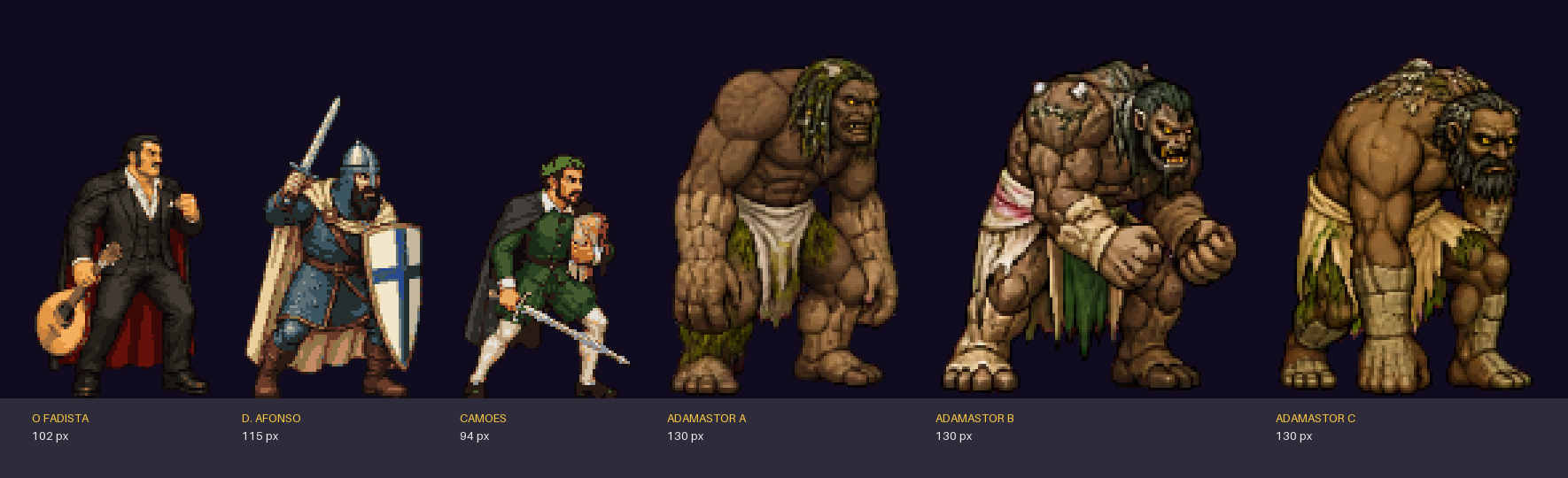
The questions that did reach me came in batches. Anything from the night waited for the morning, and most came with the producer's recommendation first. I usually took it, once accepting all 31 recommendations in the designs for the leaderboards and tournaments in a single answer. A few choices it left wholly to me, with no advice, such as the three designs for Adamastor, the storm giant you fight last, and the game's logos. Choices came as pictures, and when they didn't show up in the chat, the producer made a sheet of the designs side by side and opened it in a tab in the editor.
How the method held up
The documents worked as the studio's memory. No agent needed to remember another's work, because every brief pointed at the files and every agent wrote back what it had built. With the log overruling the bibles, a decision was on record at once, in one file, without waiting on an edit to a long bible that an agent might stop halfway through.
The roles worked differently from the plan. Every agent was labelled and briefed in its roles, but more than half the agents on the board combined two or three, and a fighter made end to end went to one agent working as character artist, animator and engine programmer at once. The separate review by each lead mostly became a check against the bibles, plus the producer looking at the previews of every piece of work itself before merging it, because an agent's report was only a claim. Specialisation came back another way. When more work followed in the same area, the producer resumed the agent that had done the last of it, with everything it already knew. The artist who drew Camões, the poet, went on to Adamastor and to O Calceteiro, the cobblestone layer, and one composer went on from the boss's music to the endings, the credits and the last two fighters' themes.
Running everything through one agent had a cost. One Sunday a question to me sat unanswered in the producer's chat, and three pieces of work froze together and stayed frozen for hours, until the producer took them over. The logs don't show whether one caused the other. The producer's guess was that its agents stall while its own chat waits for an answer, and from then on its rule was to ask only when I was around.
Halfway through the nine days it was working well enough that I asked the producer to write the method down, so I could share it. It packed it into a skill, a folder of instructions in the game's repository that a Cursor agent can load, so that the next project's producer starts from what this one learnt. The producer kept adding to it whenever something went wrong. It opens by telling the next producer who's who: "You are the producer. The user is the director."